Archive for April, 2008

House of Peña

Saturday, April 26th, 2008

People in Argentina don’t sleep. Restaurants don’t even open their doors until 8PM, and even then most people don’t go out to eat until 10. Going to bed on a full stomach isn’t healthy, so luckily clubs don’t get busy until 2 or 3 and go until the morning. Needless to say, this lifestyle didn’t quite fit into our schedule of getting up for our 9AM Spanish class. Since our class ended on Fri. we decided to sample some Argentinian nightlife. After the obligatory 11PM steak, we went to Peña Los Cardones. Peñas are grass-roots get-togethers showcasing popular folklore – which usually means locals meeting up for traditional-style dancing and music over drinks. In German beer hall fashion, wooden tables dominate the floor space accommodating the lively crowd taking in a hearty share of live folk music and Quilmes brew (the domestic beer in Bs As). The performance part of the evening lasts until 2AM, culminating in a big sing along on stage.

[youtube]http://www.youtube.com/watch?v=hO5mFMHQqKQ[/youtube]

Then each table has a guitar and a songbook and everyone spends the rest of the night singing traditional folk songs

[youtube]http://www.youtube.com/watch?v=EJp0Ky3GccA[/youtube]
Spanglish

Friday, April 25th, 2008

Spanish Class

Since my last extended period of being in a Spanish speaking country didn’t produce much results, we decided to enroll in a few Spanish classes during our week in Buenos Aires.  The morning class was more traditional, in a classroom setting and the afternoon class was a combination, tour/language class where we went around the city to different areas and learned some practical Spanish.  We had to go to the bus station, the supermarket and restaurants and try to practice what we learned.  It was pretty fun and an interesting way to see the city.  Unfortunately Argentinian Spanish is a bit odd so it’s kind of like being taught to have a speech impediment to the rest of the Spanish speaking world, but  at least I can now ask where the bathroom is.

Ojo de bife

Friday, April 25th, 2008


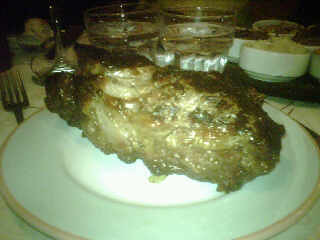
Argentina is known for its delicious beef, and by looking at this photo how could you have any doubts?? If you can believe, this is the rib eye steak Mike ordered at La Cabrera in Buenos Aires. My guess is that it was 2 pounds of beef, maybe more. It was big enough to measure in terms of volume/cubic inches– that’s how thick and crazy big it was. My order of the bife de chorizo (the rump steak) was also a giant serving and tasted even better than the ribeye.
If I knew how large the portions were we would have shared one steak, especially since we sat down to eat around 10:30PM (which is the typical time Argentines eat).

While we were in the guayborhood

Sunday, April 20th, 2008

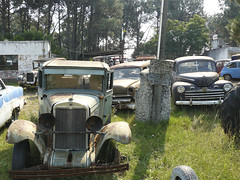
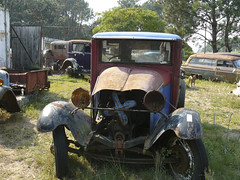
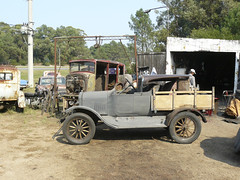
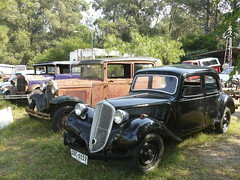
After leaving Paraguay we decided to take a short trip to Uruguay before settling in for our week in Buenos Aires. It’s a pretty sleepy little country and even sleepier since peak season is over and the beaches have cleared out. One interesting thing we did notice was that there are tons of classic cars driving around the country. I found this article in the New York times from 1990 that basically explains that in the early part of the last century, a booming Uruguay economy led to lots of cars being imported from the US and the UK, but when the economy tanked in the 2nd half, people were forced to hold onto and care for their old cars for decades.

Classic cars in Uruguay-7 Classic cars in Uruguay-6

Classic cars in Uruguay-4 Classic cars in Uruguay-2

another long, long bus ride

Thursday, April 17th, 2008

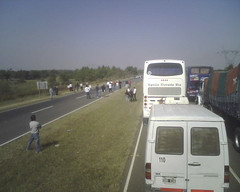
first class bus travel includes whiskey farmer's strike leads to stand still on the highway

From Encarnacion, Paraguay we crossed into Posadas, Argentina then took another bus onto Buenos Aires. A 12 hour overnight bus ride became a 20hour bus ride. Fortunately, we were traveling in lido class (first class) with fully reclining seats, movies, hot meals and whiskey to wash away the hours.

For weeks now, the farmers in Argentina have been striking against the increased export taxes the government recently approved. Their strikes include closing down major roads and highways, leaving cars and buses sitting on the road for hours on end. Tuesdays are their day to strike. Last week Tuesday, the only access road to Iguacu Falls was closed down, preventing us from accessing the falls from Argentina. This week Tuesday we ended up sitting on the highway leading into Buenos Aires adding 8 hours onto an already long bus trip. Although the delays are annoying, I’d much rather deal with a road block than the reality of restaurants running out of beef in Buenos Aires.

Trinidad, Paraguay

Thursday, April 17th, 2008

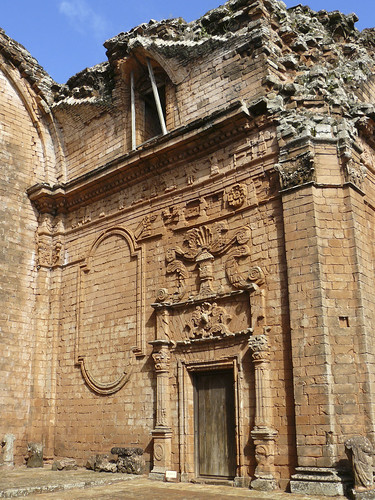
old church at the Jesuit missionary of Trinidad

A number of different missions exist in the Rio de la Plata region near the borders of Paraguay and Argentina, but the Trinidad del Parana was the last to be built in 1706.  By the late 18th century, Jesuits began to abandon their missions due to their decline in influence on the local people.

Caapucu, Paraguay

Thursday, April 17th, 2008

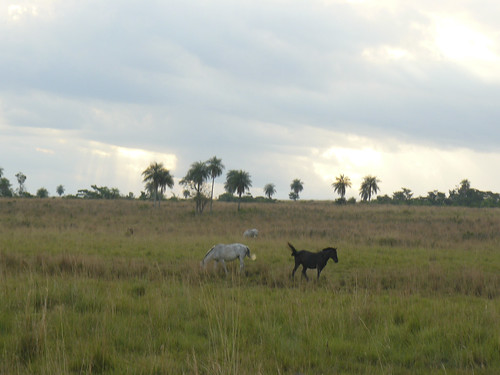
horses grazing at sunset

We spent a few nights on an estancia in Caapucu (pronounced ca-a-puu-ku) to do some horseback riding and relaxing, before heading to the missions in the south of Paraguay. This ranch had the normal cows, horses, buffalo and dogs, but sadly they also had a jaguar, a puma, mountain cat, and some kind of monkey. Apparently the owners´friends caught these animals up in the Chaco, and brought them to the farm to be kept in cages. We also learned that there were two jaguars, but one of them escaped and killed a few people.

Asuncion, Paraguay

Thursday, April 17th, 2008

We made a quick stop over in Asuncion, the capital of Paraguay to check out city life where tradition meets modern ways; a mix of old colonial and semi-modern buildings. The colonial buildings throughout the city that have been restored are brightly painted and pleasant to look at, but the city itself looks a bit tired.

Walking through the city we happened upon a demonstration where students are hoping to amend the college acceptance policy. A few blocks later we found ourselves in a political rally for Blanco, who will quite possibly become the first woman president of Paraguay. Presidential elections are being held here next week, and posters and banners for the candidates are everywhere. The current political party has the biggest budget, as the city was dominated by their campaign slogan, ‘somos 1′ or ‘we are one’ for Blanco. Although Paraguayans have long been activists demanding rights and working around their corrupt government ways, they are also resigned to know that things won´t change overnight.

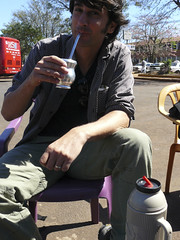
mike drinking mate Another long standing tradition in Paraguay (and in much of South America), cutting across all socio-economic classes is that of drinking yerba mate (dried holly leaves) steeped in hot water. A bombilla or metal straw with a sieve at the bottom is used to drink the tea. When the weather is in the 90´s, than they switch to iced tea (called terere) to which they will add medicinal herbs. Paraguayans will carry their own gallon sized thermos filled, along with a cup and a metal straw, which is not only practical on a hot day, it´s also very social. Groups will share one cup and straw, refilling and passing it along to each other.

Iguacu Falls

Tuesday, April 8th, 2008

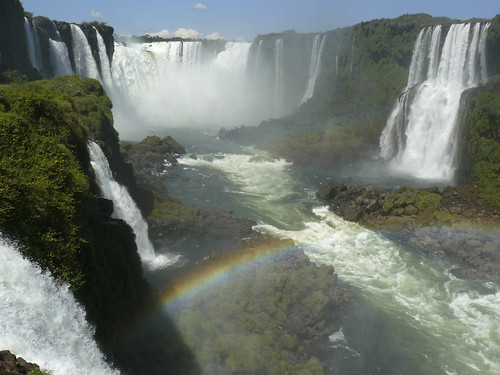
amazing view of devil's throat in Iguacu Falls

Twice as high as Niagara Falls, two thousand tons of water per second, 275 waterfalls along 2.7 kilometers, borders Brazil and Argentina. This is the devil’s throat, and it’s beautiful.

buses and Brazil

Tuesday, April 8th, 2008

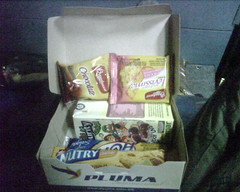
Snack pack on our 22 hour bus ride The best way to get around Brazil (and all of South America) is by bus. It’s not like taking the Grey Hound from Philly to NYC or that dreadful overnight bus in Albania, complete with chain smokers…it’s more civilized. Executivo class buses provide a snack pack, pillow and blanket for your comfort, and lido class buses include the snack pack, pillow, blanket and seats that nearly fully recline. In order to get to Foz do Iguacu, we took a 6 hour bus back to Sao Paolo, only to get on an 16 hour bus to our destination.

Rocinha favela

Tuesday, April 8th, 2008

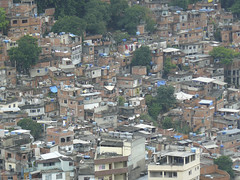
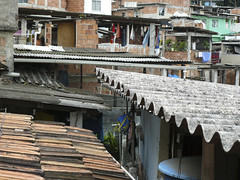
view of rocinha favelas from above rocinha favela neighbors live in close quarters

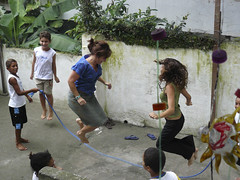
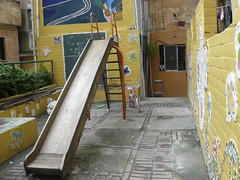
hedda playing with the kids in the favela new playground for kids in the favela

The Rocinha favela is located on the hills of Rio de Janeiro which ironically has the best views of the beautiful beaches below. Rocinha was built by refugees or former soldiers the government had no use for. Started in the late 1800’s, the government allowed public land to be used for housing, largely ignoring the poor shanty towns until it began spreading into the metropolitan areas. With an estimated 20% of Rio’s population and roughly 750 favelas surrounding Rio, the government is now taking notice.

Crime is not tolerated in the favelas. The drug lords who control the favelas are fierce about controlling any activity that might attract police presence. There is a complex network of lookout posts that make it virtually impossible for the police to enter the favela unnoticed. Rather than attend school, many of the kids prefer to work for the drug lords. The favela tour gives back to the community, donating part of the proceeds to an activity center where children go for half the day to keep them off the streets.

Rio de Janeiro

Tuesday, April 8th, 2008

meeting up with Hedda in Rio From Paraty we headed straight for Rio to meet up with Hedda (and her friend Claire) for a few days to catch up since we last saw her in July. The overcast skies didn’t keep us from doing the requisite tourist activities. We went up to Christ the Redeemer, watched a football (soccer) game, toured Rocinha favela (township), watched Brazilian volleyball on Ipanema Beach (no hands, only feet, head and chest), went to a churrascaria for all you can eat meat, and went to Lapa for dinner where Hedda almost had her wallet stolen. I’d say we did all that we could do as a tourist in Rio.

Rio’s burning

Thursday, April 3rd, 2008

“Hearing that soccer was the world’s most popular sport was sort of like hearing that broccoli was the world’s most popular food. You want to ask, ‘Have you tried pizza?'”

I have to agree with Chuck Klosterman on that one. We went to our first soccer game in Rio, and although there wasn’t much action on the field, there sure was plenty in the stands. Keep in mind this video was shot BEFORE the game had even started.

[youtube]http://www.youtube.com/watch?v=6I04syVqous[/youtube]

Caixadoce and Praia do Meio

Wednesday, April 2nd, 2008

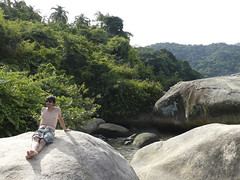
mike at the natural pools of caixadaco Today we took a 20 minute mini bus ride from Paraty this morning to Trindade.  From Trindade, it was supposed to be a 30 minute hike through Praia do Meio to Caxiadoce. Sounded easy enough from the start…but whenever Mike and I go on a hike, it’s never a direct route. We seem to always get lost. The half an hour that it takes everyone else, always takes us much longer…today it took us two hours.

Caixadoce is a natural pool of water, formed from these giant boulders (that form a circle in the water) which also serve to protect you from the surf of the ocean. The water felt cool and refreshing after the hike. Here’s Mike’s relaxing and enjoying the afternoon sun.

There’s also an alternative to hiking…small motorboats go back and forth from Caixadoce to Praia do Meio for only 5 reias each (about $2.50 ). For our return, we decided to skip the hike and take the 4 minute motorboat back.  Five minutes after boarding the boat, we were relaxing under beach umbrellas, drinking a cold beer.

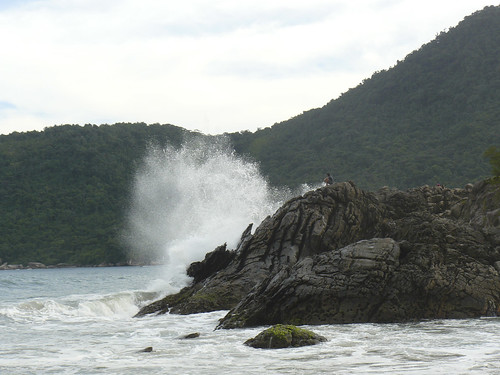
waves crashing in on Mike

Hard to see but Mike is sitting on top of the rocks where the waves are crashing in on him.

a little bit of paradise in Paraty

Wednesday, April 2nd, 2008

Portuguese town of Paraty
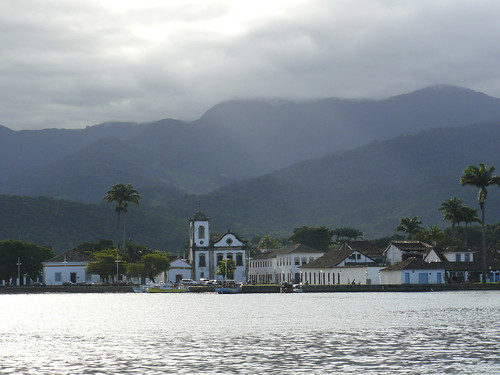
From Sao Paolo we took a 6 hour bus ride up the coast to Paraty (pronounced par-a-chee), which is an old Portuguese town with quaint churches, cobblestone roads, and great restaurants. Paraty is the perfect historical old town, that has been well maintained, but not yet  completely over-run by annoying tourist traps and rather than the typical tourist souvenir shops, it seems there are many local artists selling their own creations.

our boat in Paratyrelaxing on the boat

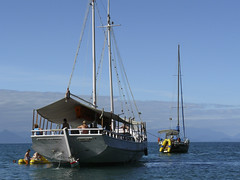
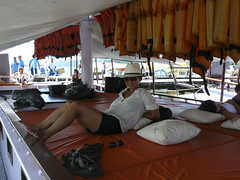
Yesterday we spent the day on a boat touring around the many small islands off the coast of Paraty. The boat ride was great fun with live entertainment, food, and stops at a few of the 360 islands nearby to swim.

what we do best with our friends…

Wednesday, April 2nd, 2008

Patty enjoying her meal at the churrascariaBrazilian waiter cooking our meat

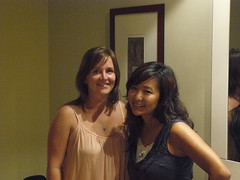
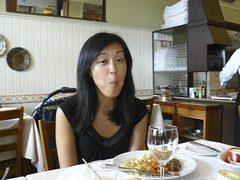
According to the Patricia, there’s not much to do in Sao Paolo except eat (& drink) and shop–which is what we did. Similar to my story with Neil, Patricia had been inviting me to visit Brazil for Carnaval for some time. But every year was the same excuse, I just didn’t have the time to make the long trip. But just recently she landed a big job that brought her back to her native Brazil, so the timing couldn’t have been better to visit Sao Paolo and check in on Patty, and do the thing we like most, eat.

The big thing in Brazil is the churrascaria, which is a Brazilian steakhouse. There are two styles of steakhouses; the traditional steakhouse where different types of grilled meats are bought out on a huge skewer (called rodizio dining) which is sliced and served table-side. The second style of Brazilian steakhouse has a grilling station near your table, and the waiter will bring out a large piece of meat, slice it, and cook it, and serve it at the same pace you eat. As you nearly finish eating what is on your plate, more is served.  We ate so much at lunch that we weren’t hungry the rest of the day, but rest assured, we still forced down dinner at 10:30pm (Brazilians eat late).

The gauchos (former cattle ranchers) in the south of Brazil are very serious about this second method of cooking steak. Patricia’s friends mentioned that it is a “selling point” to those buying a house. Apparently, these grills are the centerpiece in the living room of any self-respecting gaucho.

Oh, and BTW, Patricia is happy to be back in Sao Paolo, reunited with her family, meeting up with old friends, and energetic for her new job.